
The camera behind your glass helps run lane-keeping, automatic emergency braking, and adaptive cruise. Move or replace that glass and the camera often needs to be recalibrated to read the road correctly. We do that in-house.
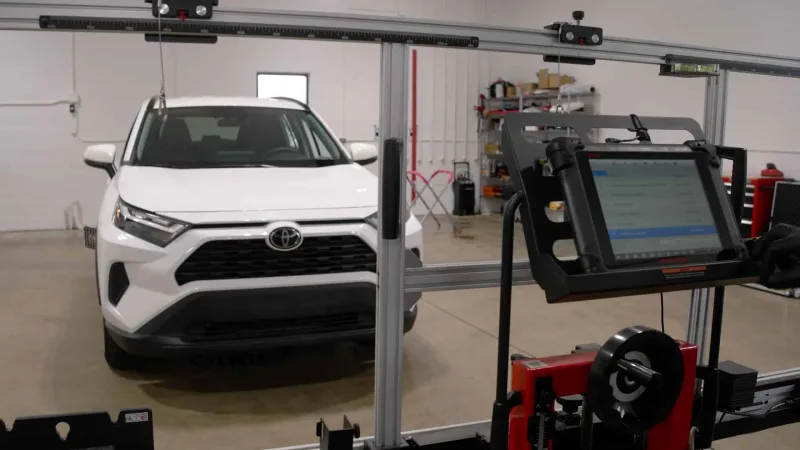
ADAS stands for Advanced Driver-Assistance Systems. These features keep you in your lane, warn you about traffic, and brake automatically in an emergency. On many vehicles the camera that powers them sits at the top of the windshield.
Because that camera looks through the glass, its aim depends on the glass being in the right position. Replace the windshield and the camera's view shifts. It needs to be recalibrated to point where the manufacturer intended.
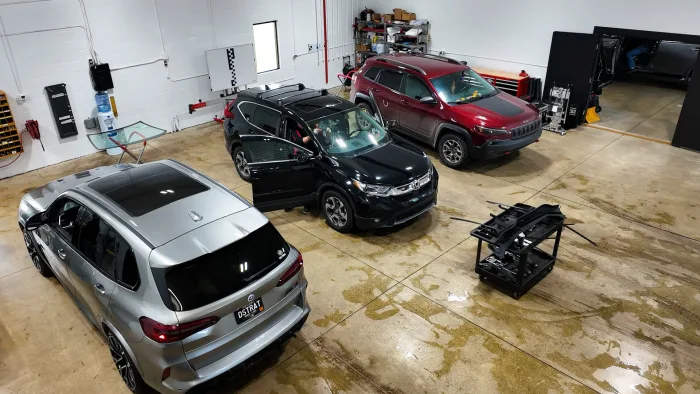
Your vehicle's manufacturer decides which one it needs, sometimes both. We confirm the requirement before we start.
Done in the shop with the vehicle parked.
Done on the road under real driving conditions.
Before any glass work, we look up whether your specific year, make, and model requires calibration, and which type.
After the windshield is set and cured, we run the required static or dynamic calibration so the camera reads the road correctly.
We confirm the calibration completed and explain what was done, so you know your safety systems are working as intended.
Not every vehicle needs calibration. It depends on the manufacturer's requirements for your model. If yours does, we quote it clearly alongside the glass.
Tell us your year, make, and model. We confirm whether calibration is required and what it means for your quote.